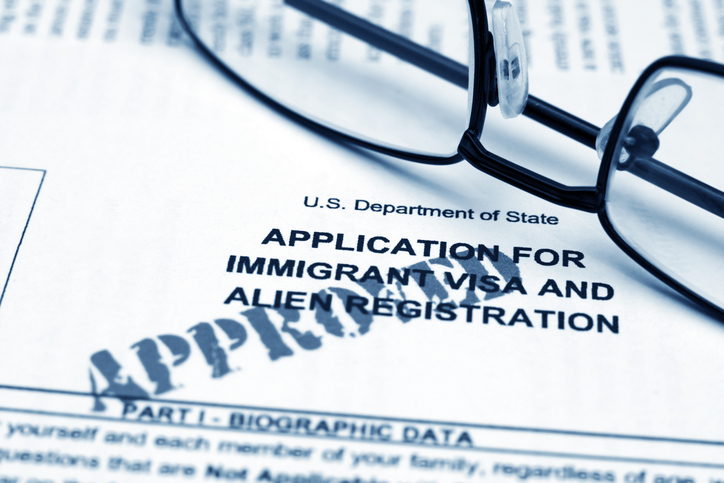
January 2019 Visa Bulletin Released
The Department of State (DOS) has issued its January 2019 Visa Bulletin. Overall, there was very little movement in most categories this month. EB-1 for all nationals advanced by three months. There was no movement for the EB-2 category, except for Chinese nationals which advanced by one month. EB-3 for Chinese and Indian nationals remained unchanged, while Philippine nationals advanced by another week.
Read More
USCIS Clarifies that Change in Worksite for L-1A Managers Does Not Require an Amendment Petition
The Administrative Appeals Office (“AAO”) of the U.S. Citizenship and Immigration Services (“USCIS”) released a decision earlier this week, ruling that USCIS had improperly revoked the L-1A status of an international manager whose employer had not filed an amendment petition to reflect a change in the manager’s worksite. The AAO agreed with the employer, an IT consulting services company, that an amendment petition was not required because the managerial job duties remained essentially the same for purposes of L-1A classification and the change in worksite was not “material.”
Read More
USCIS Proposes Changes to Annual H-1B Visa Lottery
U.S. Citizenship and Immigration Services (USCIS) has just proposed two major changes to the H-1B visa lottery process, which takes place each year during the first week of April.
Read More
December 2018 Visa Bulletin Released
The Department of State (DOS) has issued its December 2018 Visa Bulletin. Overall, there was very little movement in most categories this month. EB-1 for all nationals advanced by three months. EB-2 worldwide is still current (except for China and lndia). EB-2 for Chinese nationals advanced by one and a half months, and EB-2 Indian nationals advanced by almost two months. EB-3 for Chinese and Philippine nationals moved forward by one week, while Indian nationals advanced by two months.
Read More
Removal Order Upheld for H-1B Worker whose Employment-Based Application for Permanent Residence was Denied
The Ninth Circuit Court of Appeals issued a decision (Ma v. Sessions) earlier this month, upholding the removal order of an H-1B worker whose timely filed H-1B extension petition was denied and whose following application for permanent residence based on employment also was denied. The court reasoned that the H-1B worker was not eligible for permanent residence because he had more than 180 days of unlawful status by the time he had filed his application for permanent residence. The H-1B worker argued that he was in lawful status while his H-1B extension petition was pending because the regulations automatically extend work authorization during this time and that he only started accruing unlawful status once his extension petition was denied. The court disagreed. It held that such work authorization does not constitute “lawful status” and that the H-1B worker had ceased to be in lawful status once the underlying petition had expired. As such, the H-1B worker had well over 180 days of unlawful status at the time he applied for permanent residence and was not eligible for any relief.
Read More
Department of Homeland Security Will Increase Use of Facial Recognition Technology to Record Departures from the United States.
The Department of Homeland Security’s Customs and Border Protection (“CBP”) unit, which is responsible for immigration enforcement along U.S. borders, has indicated it will expand the use of facial recognition technology to record departure information from international travelers. The technology is being implemented gradually at airports nationwide.
Read More
TN Visa Program Survives Trade Talks
The TN visa program has survived the recent trade talks between the United States, Canada and Mexico despite the Trump administration’s earlier calls for limiting it. The TN visa allows certain Canadian and Mexican professionals to work in the United States. The new United States-Mexico-Canada Agreement (“USMCA”) was announced publicly by the White House on October 1, 2018.
Read More
November 2018 Visa Bulletin Released
The Department of State (DOS) has issued its November 2018 Visa Bulletin. Overall, there was very little movement in most categories this month. EB-1 for Chinese and Indian nationals had no movement. EB-2 worldwide is current (except for China and lndia). EB-2 for Chinese nationals advanced by one and a half months, but there was no movement for EB-2 Indian nationals. EB-3 is current (except for China, India, and the Philippines). EB-3 for Chinese and Indian nationals had no movement, but Philippine nationals moved forward by one week.
Read More
New USCIS Policy on Removal Proceedings Takes Effect
Starting October 1, 2018, U.S. Citizenship & Immigration Services (USCIS) may begin removal (also referred to as “deportation”) proceedings after denying an application for a benefit, such as an application for adjustment of status to lawful permanent resident (Form I-485), naturalization (Form N-400), or change or extension of status (Form I-539). This new policy stems from President Trump’s Executive Order 13768, “Enhancing Public Safety in the Interior of the United States.”
Read More
Registration for the Annual Green Card Lottery Ends November 6, 2018
The Department of State just announced that the online registration for the annual Green Card lottery, formally referred to as the Diversity Immigrant Visa Program 2020 (DV 2020), will begin at 12 noon, Eastern Daylight Time (EDT) (GMT–4), Wednesday, October 3, 2018, and end at 12 noon, Eastern Standard Time (EST) (GMT–5), Tuesday, November 6, 2018. We recommend registering as soon as possible because the DOS website slows down or freezes due to very heavy traffic towards the end of the registration period.
Read More